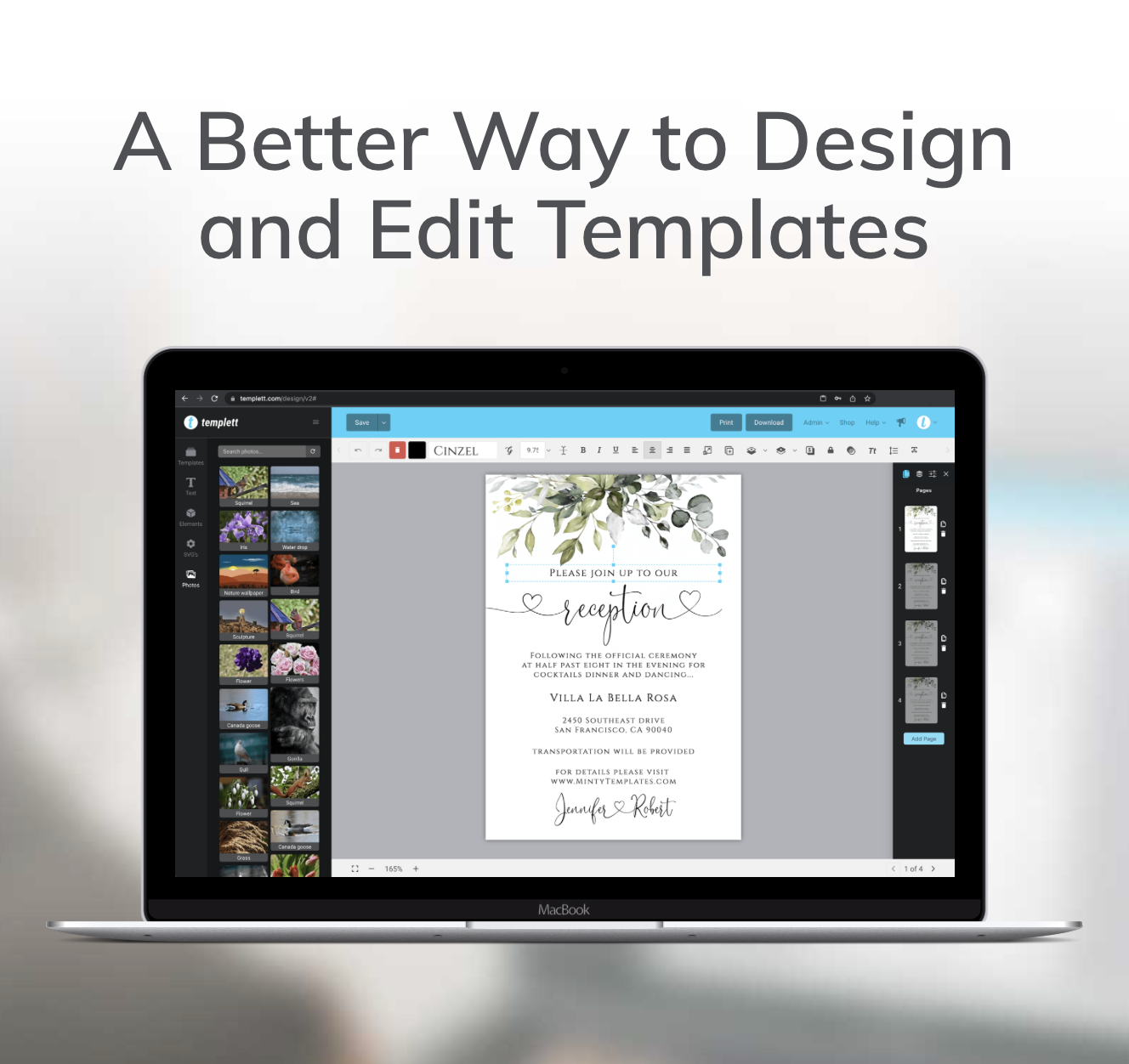
Designing templates that feel “low effort” to the buyer isn’t about simplifying your design skills. It’s about understanding buyer psychology. Most people purchasing editable templates are not designers. They are decision-fatigued, time-constrained, and outcome-focused. If your template feels complicated—even if it isn’t—they hesitate.
And hesitation kills conversions.
To design templates that truly feel easy, you have to understand how buyers think, how they evaluate effort, and what subconsciously signals, “I can handle this.”

Who Your Buyers Actually Are
Most template buyers fall into one of three psychological profiles:
- The Overwhelmed Planner
They’re organizing an event, launching something, or managing a deadline. They are juggling multiple decisions at once. Their mental load is already high. When they see a template, they are not asking, “Is this artistic?” They’re asking, “Will this reduce my stress?”
- The Non-Designer Business Owner
They care about professionalism but don’t trust their design ability. They are afraid of making something look “wrong.” If the template feels overly styled or visually dense, they assume they’ll ruin it.
- The Last-Minute Buyer
They need something now. Speed matters more than customization depth. They want to open the file, make quick edits, and be done.
Across all three profiles, one thing is consistent: buyers are not looking for creative freedom. They are looking for controlled simplicity.
If your template feels like work, they disengage.
Effort Is Emotional, Not Logical
A template can technically be easy to edit but still feel overwhelming.
Effort isn’t measured in minutes. It’s measured in perceived complexity.
When buyers open a design and see:
- Too many font styles
- Tight spacing
- Decorative elements layered behind text
- Multiple alignment directions
- Low contrast between text and background
Their brain registers friction.
Cognitive psychology calls this cognitive load. The more visual information someone has to process, the more mental energy it requires. When cognitive load increases, confidence decreases.
Buyers rarely articulate this clearly. They don’t say, “This design has excessive visual noise.” They say, “It feels hard.”
Designing for low effort means reducing cognitive load before they even start editing.

Clarity Signals Safety
When a template feels structured and predictable, buyers feel safe.
Safety in design comes from:
- Clear hierarchy (obvious headline, obvious supporting text)
- Consistent alignment
- Strong contrast for readability
- Logical grouping of information
- Generous white space
These elements signal that the design is controlled.
A predictable layout lowers anxiety because it mirrors patterns people already understand. Title at the top. Details grouped together. Supporting information clearly separated. The buyer doesn’t have to decode the structure.
The less decoding required, the easier the experience feels.
Why Over-Design Backfires
Many sellers assume adding detail increases value.
Psychologically, the opposite often happens.
When a design is overly decorated, buyers subconsciously worry about disrupting it. The more polished and intricate it looks, the more fragile it feels.
They think:
“What if I mess this up?”
“What if my edits ruin the balance?”
That hesitation increases perceived effort.
Minimal restraint—limited font combinations, cohesive color palettes, clean spacing—creates confidence. It communicates that small changes won’t break the design.
Templates that feel adaptable feel easier.
Designing for Decision Simplicity
Decision fatigue is real. By the time buyers reach your listing, they’ve likely compared multiple options. They are tired of evaluating.
Your template should not introduce more decisions than necessary.
Limit font pairings.
Keep color palettes cohesive.
Avoid unnecessary decorative variations.
When buyers see a clean, structured design, they intuitively understand that editing will involve simple tweaks, not redesigning from scratch.
That perception is powerful.
The goal is not to remove customization. The goal is to create guided customization.
Guided customization feels supportive.
Unrestricted customization feels overwhelming.
The Role of Readability in Perceived Effort
Readability is one of the strongest psychological indicators of ease.
If text is easy to scan, buyers assume editing will be easy too.
Strong contrast, clear font sizing, and intentional spacing reduce visual friction. If someone can read the template instantly at thumbnail size, it communicates clarity and control.
Clarity builds trust.
And trust reduces hesitation.
Designing for Emotional Relief
At its core, a “low effort” template provides emotional relief.
The buyer wants to feel:
- Capable
- Efficient
- In control
When your design feels calm, cohesive, and structured, it reassures them. It says, “You don’t need design skills. This already works.”
That reassurance increases conversions. It also increases satisfaction after purchase.
Buyers who feel confident during customization are more likely to complete the process, leave positive reviews, and return.
The Strategic Advantage
Designing templates that feel “low effort” to the buyer is not about making them basic. It’s about making them psychologically supportive.
Reduce cognitive load.
Strengthen hierarchy.
Prioritize readability.
Maintain cohesion.
Limit unnecessary complexity.
When your design carries the structural weight, the buyer doesn’t have to.
And in a market full of visually busy options, the template that feels easiest often wins.