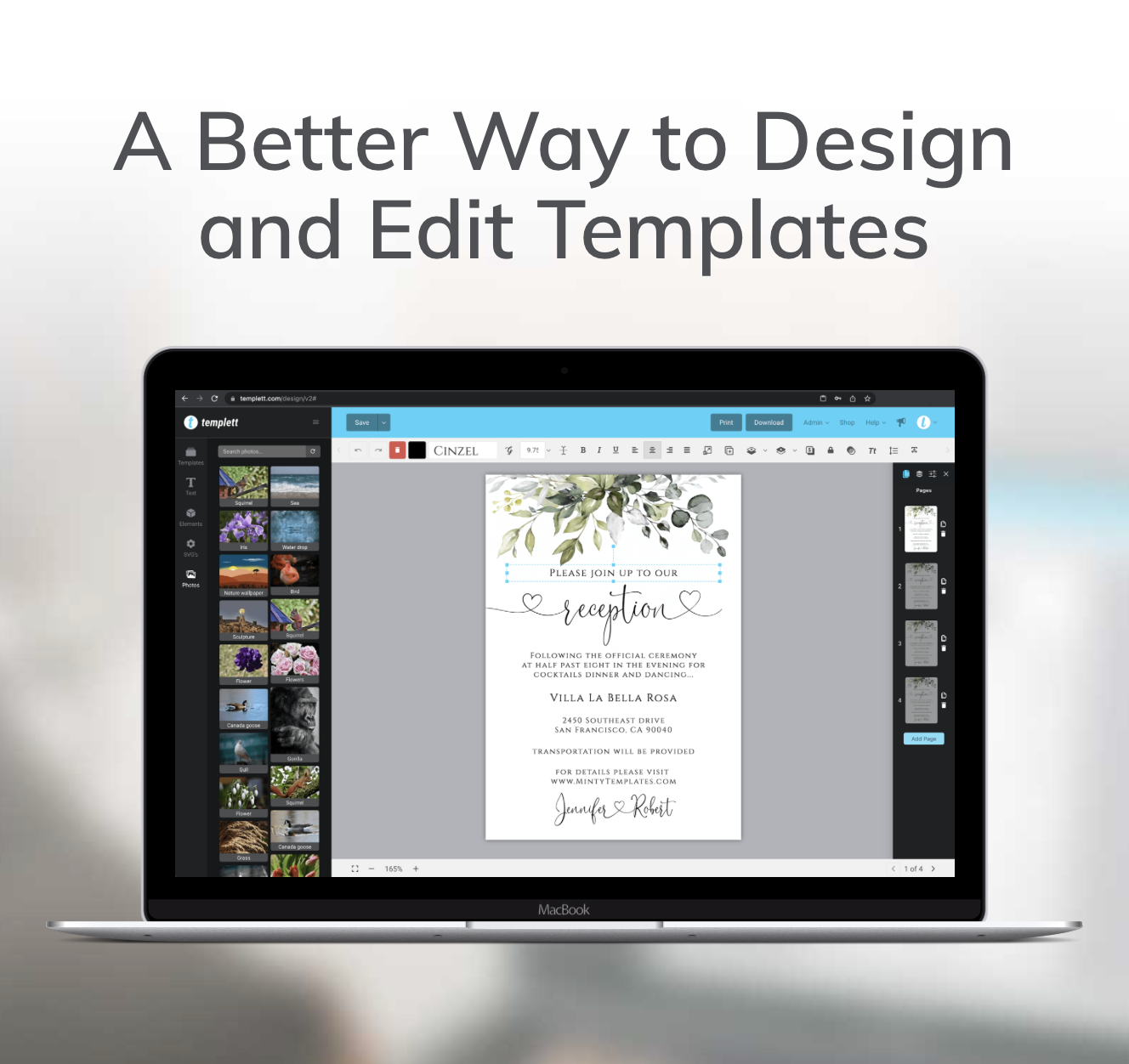
Learning how to design a bridal shower invitation that stands out doesn’t mean starting from scratch or creating something overly complicated. With a few intentional design choices, you can transform a ready-made template into an invitation that feels unique, cohesive, and polished. The key is knowing which details make the biggest visual impact.
Bridal shower invitations have an important job. They share the essential event details while also setting the tone for the celebration. Before a guest arrives, the invitation gives them their first glimpse of the theme, style, and overall feel of the shower.
If you’re figuring out how to design a bridal shower invitation, focus less on adding more and more on making intentional choices. Typography, color, imagery, spacing, and hierarchy can completely change a template with a few simple tweaks.
Better yet, this is a repeatable process you can use across different bridal shower themes and other life-event templates.
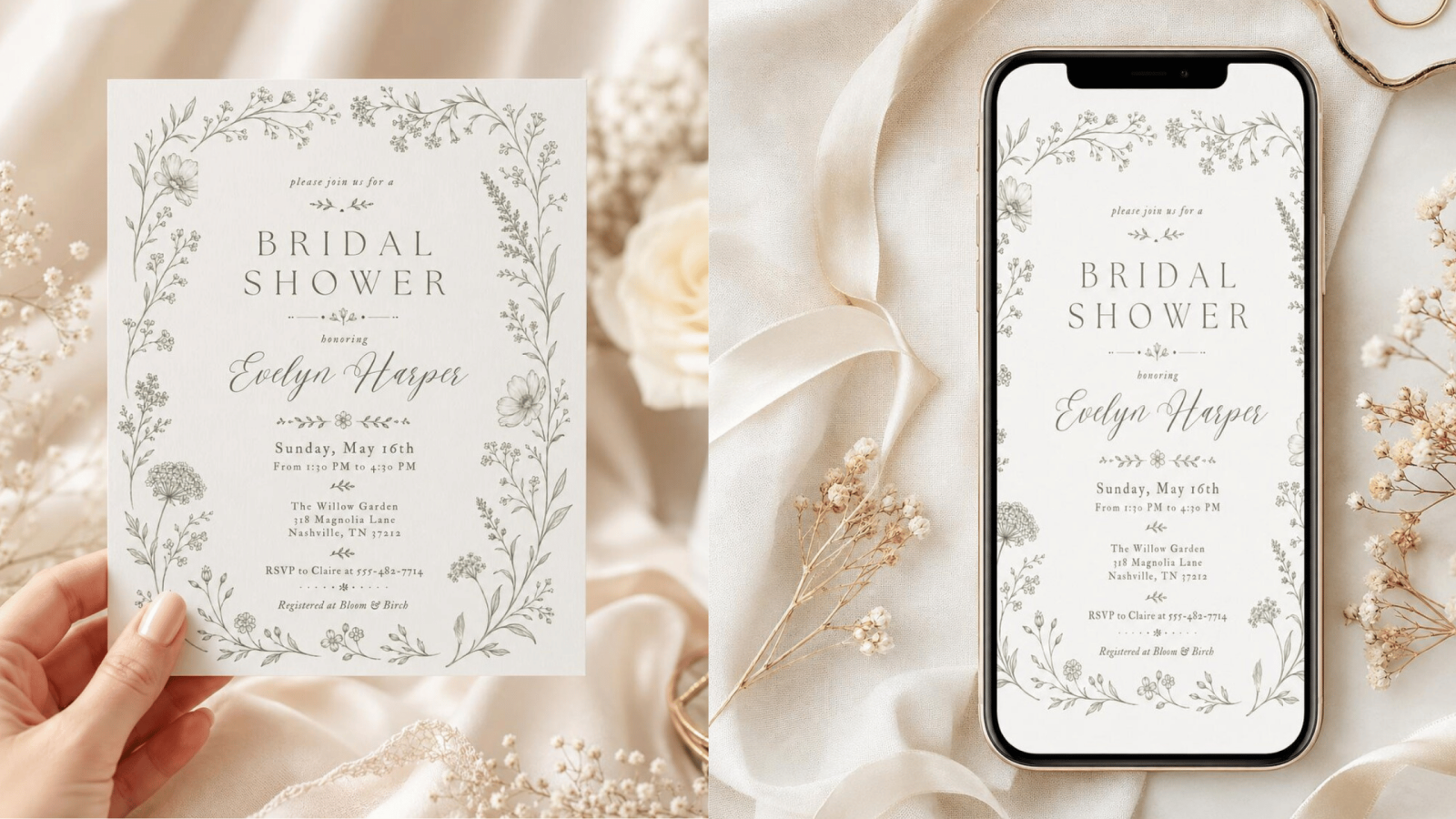
1. Start With One Clear Design Direction
Before changing fonts, colors, or illustrations, decide what you want the invitation to feel like.
Romantic and floral? Modern and minimal? Playful and colorful? Elegant and sophisticated?
Choosing one direction makes every decision that follows easier.
For example, a garden bridal shower might use delicate botanical illustrations, soft greens, and romantic typography. A modern brunch invitation could use bold type, warm neutrals, and a simpler layout.
You don’t need dozens of decorative elements to communicate a theme. A few intentional choices are usually more effective.
When every element supports the same direction, the invitation immediately feels more cohesive.
2. Create a Strong Visual Hierarchy
One of the biggest differences between an amateur-looking invitation and a polished one is visual hierarchy.
Not every piece of information should have the same visual importance.
Ask yourself: What should someone notice first?
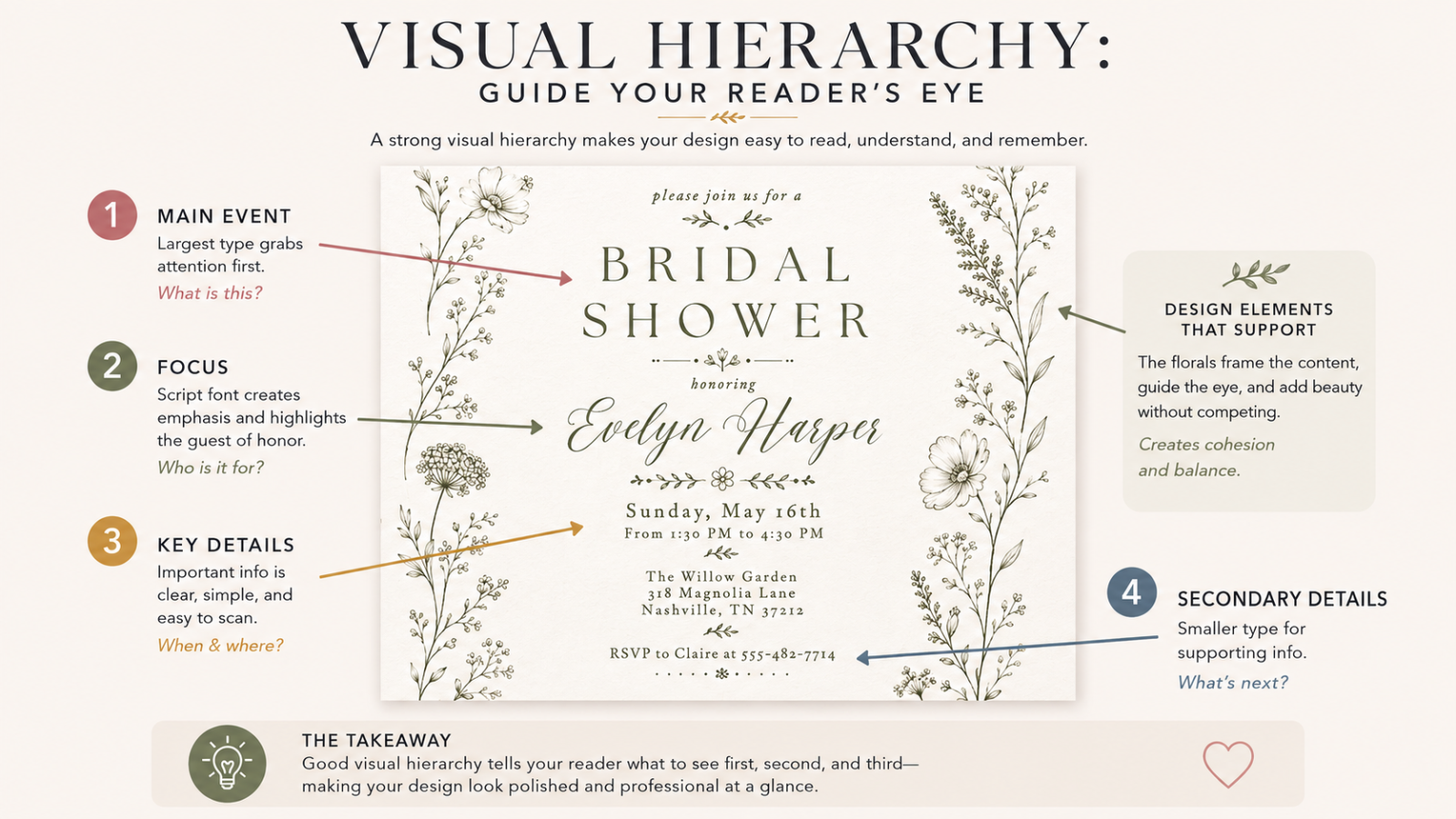
For most bridal shower invitations, the bride’s name or the words “Bridal Shower” will be the main focal point. The date and time come next, followed by the location and RSVP information.
Use size, font weight, color, and spacing to guide the eye naturally through these details.
The bride’s name, for example, might be the largest or most decorative text. Supporting information can be smaller and simpler.
This creates clarity and makes the invitation easier to understand at a glance.
3. Choose Fonts That Work Together
Typography can completely change the personality of a bridal shower invitation.
A script font can make a design feel romantic. A serif can create a classic or sophisticated look. A clean sans serif can make the same template feel modern.
But more fonts don’t necessarily create more personality.
Usually, two complementary font styles are enough.
Try using one distinctive font for the main headline or name and a simpler font for event details. This creates contrast while keeping the design easy to read.
When learning how to design a bridal shower invitation, readability should always be part of the decision. Decorative typography can add personality, but guests shouldn’t have to work to understand the date, location, or RSVP information.
4. Build a Cohesive Color Palette
Color is one of the quickest ways to transform a template.
Instead of changing individual colors randomly, think in terms of a small, intentional palette.
Choose a primary color, one or two supporting colors, and a neutral. Then repeat those colors throughout the invitation.
For a garden shower, that might mean sage green, cream, blush, and a deeper green accent. A modern bridal brunch could use terracotta, warm beige, and dark brown.
A limited palette helps the entire design feel connected rather than busy.
It also makes it much easier to turn your invitation into a coordinated collection later.
5. Use Illustrations With Intention
Flowers, bows, champagne glasses, cakes, lemons, greenery, and other illustrations can quickly establish a bridal shower theme.
The key is knowing when to stop.
Instead of filling every empty space, choose illustrations that strengthen the concept.
A single floral arrangement framing the bride’s name can have more impact than several unrelated decorative elements scattered around the invitation.
When adding illustrations from Elements, consider whether their visual styles work together. Similar colors, line weights, and artistic styles help maintain cohesion.
Decorations should support the invitation, not compete with the information.
6. Give the Design Room to Breathe
When a template doesn’t feel quite professional, the problem isn’t always what’s missing.
Sometimes, there’s simply too much.
Spacing is one of the easiest ways to make a design feel more polished.
Look at the space between headings, names, dates, and supporting information. Related details should feel visually connected, while separate sections need enough space to distinguish them.
Also pay attention to the edges of the design. Text and illustrations pushed too close to the boundaries can make an invitation feel cramped.
A little extra breathing room can make the entire layout feel more intentional.
7. Add One Detail That Makes It Memorable
One of the most useful lessons in how to design a bridal shower invitation is that making something unique doesn’t require changing everything.
Instead, create one memorable design moment.
Maybe it’s oversized typography behind the bride’s name. Maybe it’s a bold color combination. Perhaps it’s an unexpected illustration or an elegant floral border.
One distinctive choice can give the invitation personality while allowing the rest of the design to stay simple.
This also makes customization faster. You’re making a few high-impact decisions rather than rebuilding the entire layout.
8. Check Readability Before Calling It Finished
Before your invitation is ready to list, look at it as a guest would.
Can you immediately tell what the event is? Is the bride’s name easy to find? Can you quickly locate the date, time, location, and RSVP information?
If something feels difficult to find, adjust the hierarchy rather than adding more decoration.
You can also look at the invitation at a smaller size. If the design still feels clear and balanced when viewed quickly, your hierarchy is probably working.
This final check helps turn a nice-looking template into something that feels polished and sell-ready.
Turn One Strong Invitation Into More Products
Once you’ve created a bridal shower invitation with a clear visual direction, don’t stop there.
The same typography, colors, illustrations, and overall style can become the foundation for matching welcome signs, games, menus, favor tags, thank-you cards, and other bridal shower templates.
Because you’ve already made the major design decisions, creating coordinating pieces becomes much faster.
That’s the advantage of developing a repeatable design process. You aren’t starting from scratch every time.
Make Simple Changes With a Clear Purpose
Understanding how to design a bridal shower invitation comes down to making intentional design decisions rather than adding more elements.
Start with a clear direction. Establish hierarchy. Choose complementary fonts. Build a cohesive palette. Use illustrations intentionally. Then give everything enough space to breathe.
These simple tweaks can take a ready-made template from familiar to unique, polished, and sell-ready in minutes.
And once you find a combination that works, you can repeat the same process for bridal showers, weddings, baby showers, birthdays, and other life events.
One template can be the starting point. Your design decisions are what make it stand out.