If you’re creating Mother’s Day templates that sell, it starts with understanding what makes this moment different.
Mother’s Day isn’t really about the product. It’s about the pause. It’s one of the few times in the year when people stop and think about what they haven’t said yet. Not because they don’t feel it—but because life moves quickly, and those things often go unspoken.
That’s what makes this occasion so powerful.

Why Mother’s Day Feels So Different
There’s something quieter about Mother’s Day compared to other celebrations. It’s not just about a single moment or event—it’s about everything that’s been building over time.
It’s the everyday things. The routines. The small, consistent acts of care that don’t always get acknowledged in the moment. Over time, those things add up into something much bigger, and this is one of the few times people actively try to express that.
That’s why it feels emotional. Because it’s not about one memory—it’s about all of them.
The Pressure to Say the Right Thing
When someone starts looking for a card or a printable, they’re not just browsing for something that looks nice. They’re trying to find the right words.
And that’s where it gets difficult.
It’s surprisingly hard to say something meaningful without overthinking it. If it’s too long, it can feel forced. If it’s too simple, it can feel generic. What people are really looking for is something that feels natural—something that sounds like what they would say, if they knew how to say it clearly.
That’s the gap they’re trying to fill.
Why Templates Matter More Than They Seem
This is exactly why Mother’s Day templates that sell work so well.
They give people a starting point. A way to express something real without having to come up with everything on their own. Instead of staring at a blank space, they’re reacting to something that already feels close to what they want to say.
A good template doesn’t feel like a shortcut. It feels like clarity. It helps someone recognize the message that already exists in their head but hasn’t been fully formed yet.
That moment—when someone reads something and thinks, “Yes, this is exactly it”—is what drives the decision to buy.
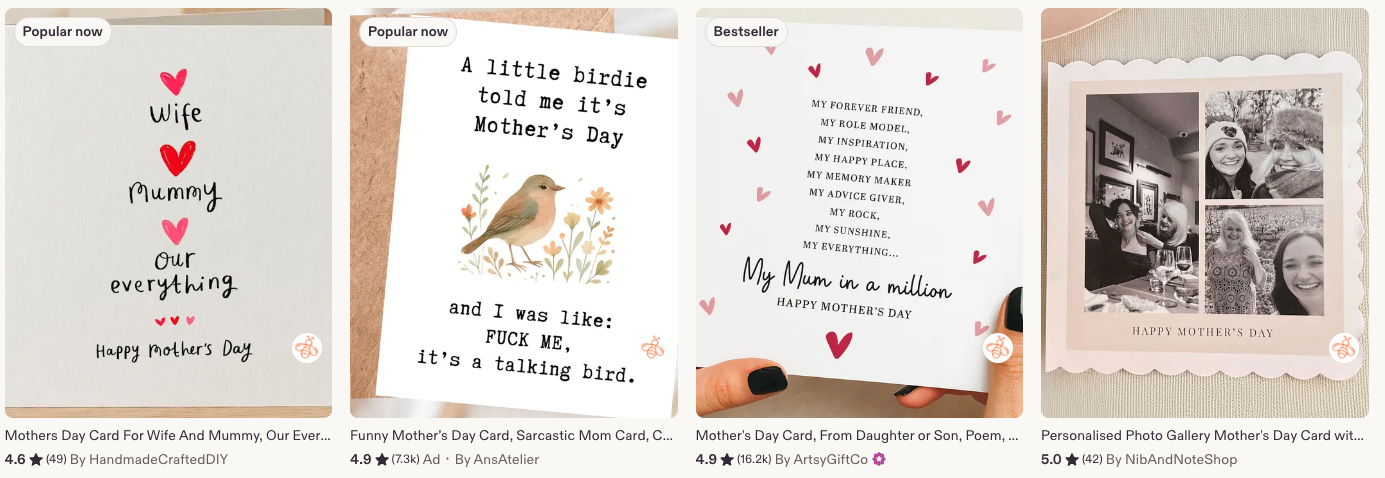
The Kind of Messages People Are Looking For
People aren’t looking for perfect messages. They’re looking for honest ones.
Something simple, thoughtful, and easy to connect with. Messages that feel personal without being overly complicated tend to resonate the most.
Here are a few directions that work especially well.
🌿 Uncommon (But Meaningful)
These feel slightly different from what people expect, but still natural and sincere:
- “You’re behind so many of the good things in my life.”
- “Everything feels a little easier because of you.”
- “You’ve shaped more than you probably realize.”
They express appreciation in a way that feels specific, without being overly formal.
✨ Fun (Light and Real)
These lean more casual and relatable, while still showing appreciation:
- “Thanks for putting up with me all these years.”
- “You deserve a day off… or at least a nap.”
- “Raising me wasn’t easy—so this card feels well-earned.”
They work well for people who want something a little more relaxed and personal.
💛 Sentimental (Simple and Sincere)
These are the messages people often come back to:
- “I don’t say it enough, but I appreciate you every day.”
- “Everything I am has a little bit of you in it.”
- “You’ve given me more than I could ever put into words.”
They’re straightforward, emotional, and easy to connect with.
Final Takeaway
At its core, Mother’s Day templates that sell aren’t about trends or complexity. They’re about helping someone say something they’ve been meaning to say.
Something simple. Something real. Something that feels like it matters.
Because when a template helps someone express that, it becomes more than just a printable. It becomes something they’re genuinely glad they found.