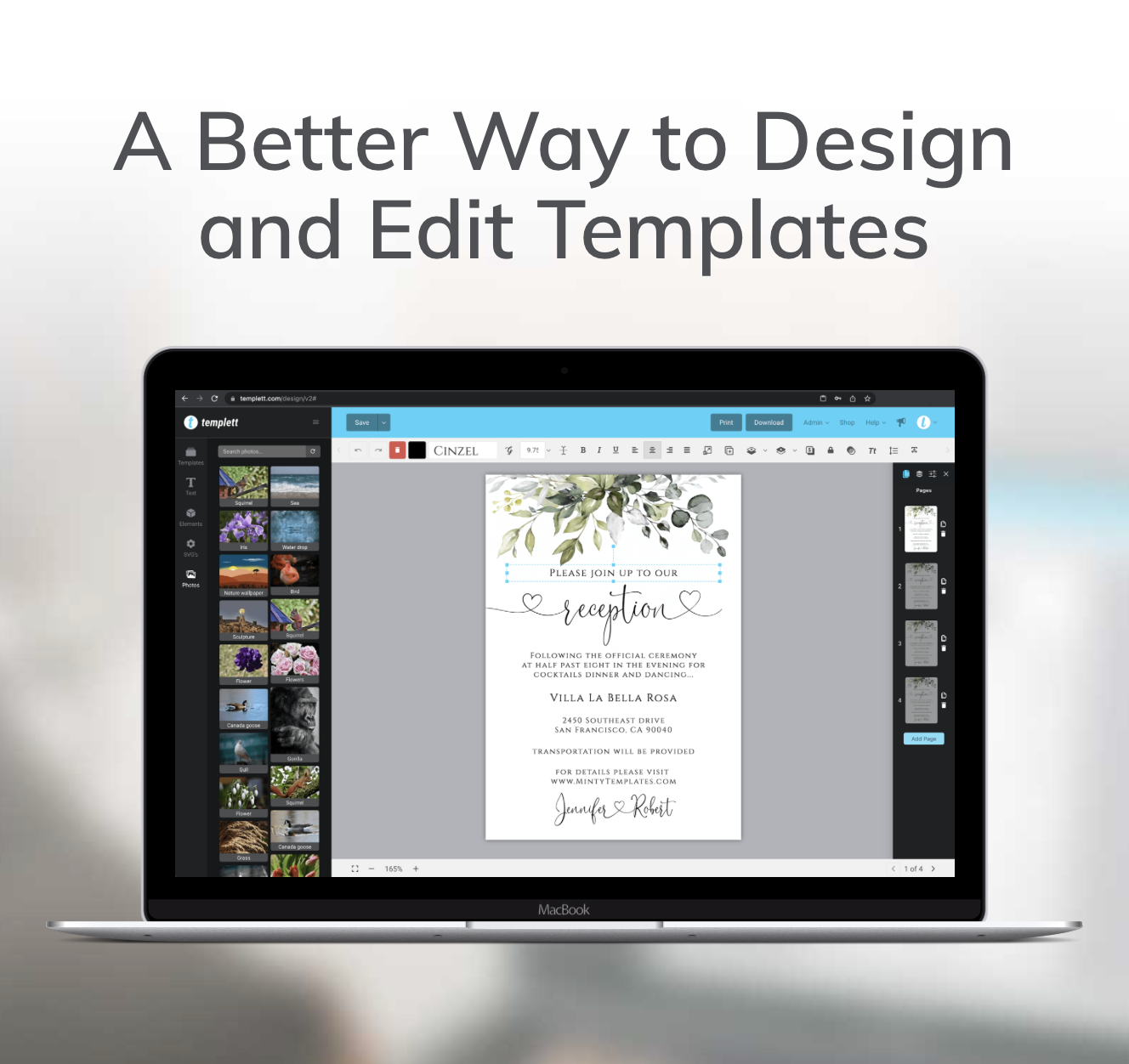
Selling digital templates in bundles can be a smart way to turn one strong design idea into a larger, more valuable product offering. Instead of creating every new listing from scratch, you can take an invitation, carry its visual style across coordinating pieces, and create a cohesive collection. But does that mean bundles are always better than individual templates? Not necessarily. The right approach depends on what you’re selling, what your buyer needs, and how naturally the design can expand.
For Templett sellers, both individual templates and matching bundles can have a place in your shop. Understanding the strengths of each can help you create products more intentionally—and get more from the designs you’ve already made.
When Selling Individual Templates Makes Sense
Sometimes a buyer only needs one thing.
Someone planning a birthday party may already have their decorations, signs, and party details handled. They simply need an invitation that matches their theme.
A standalone template gives them exactly that.
Individual products are also useful when you’re testing a new style or niche. Instead of spending time creating an entire collection before you know whether the concept will connect with buyers, you can start with one polished product.
If it performs well, you already have a strong foundation for expanding it later.
This approach can make creating new products feel much more manageable, especially when you’re still discovering which themes and styles fit your shop.
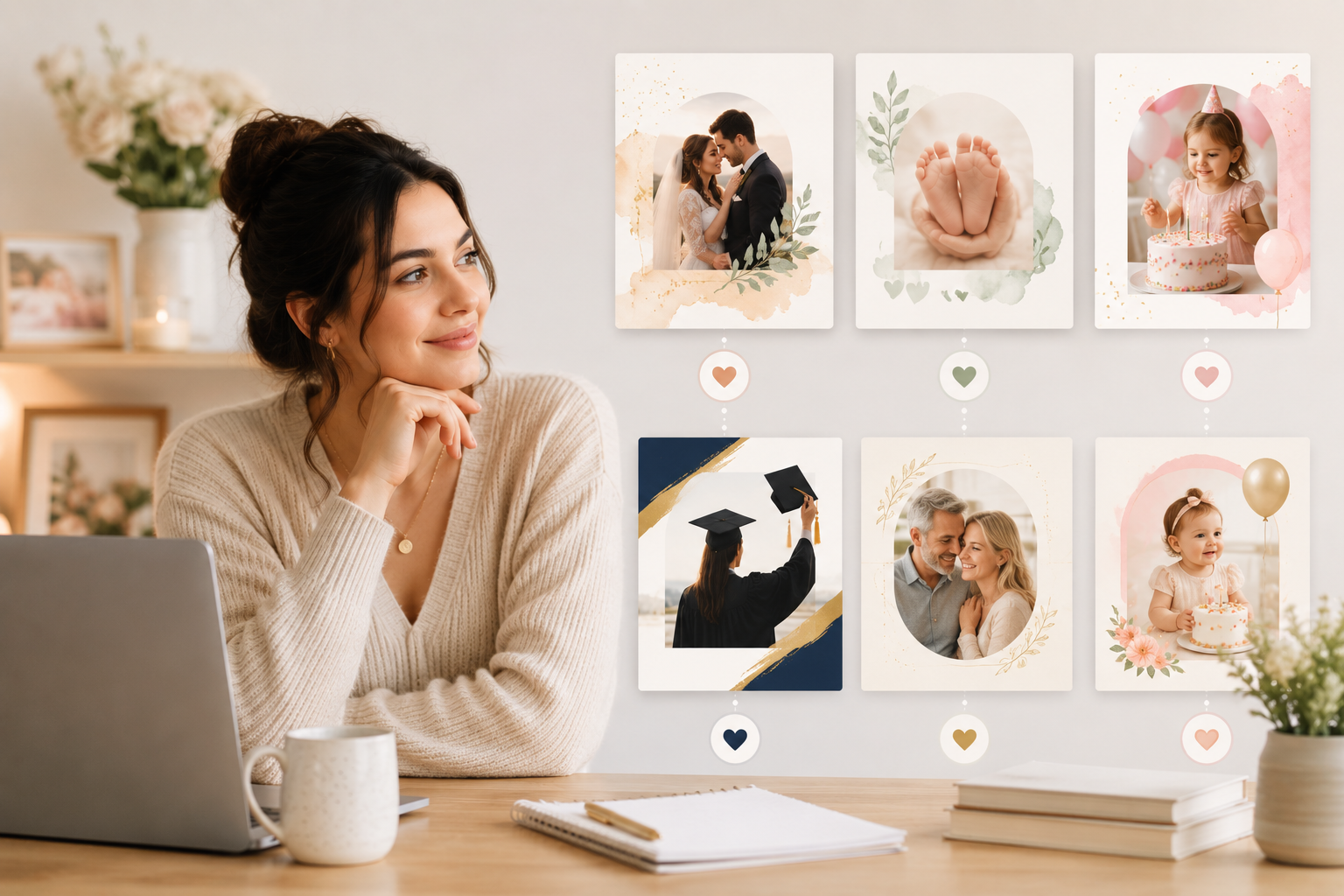
Why Selling Digital Templates in Bundles Can Work
Now think about a buyer planning a wedding or bridal shower.
They may need an invitation, welcome sign, menu, games, favor tags, and thank-you cards. Finding each product separately—and trying to make everything look like it belongs together—takes additional time.
A matching bundle solves that problem.
That’s one of the biggest advantages of selling digital templates in bundles. You’re not simply offering more templates. You’re giving the buyer a coordinated solution.
The typography already works together. The colors match. The illustrations feel consistent. The overall style carries from one product to the next.
For buyers, that creates convenience and visual cohesion.
For sellers, it creates an opportunity to turn one successful design direction into multiple sell-ready products.
Start With One Strong Anchor Product
You don’t need to sit down and design an entire collection at once.
Start with one strong product.
For a wedding collection, that might be the invitation. For a baby shower, it could also be the invitation or a set of shower games. For a birthday, you might start with an invitation built around a specific party theme.
Get that first design right.
Focus on clear hierarchy, strong readability, intentional typography, a cohesive color palette, and illustrations that support the overall theme.
Once those decisions are made, you’ve created a visual system you can reuse.
That makes the next product much faster to create.
Turn One Design Into a Collection
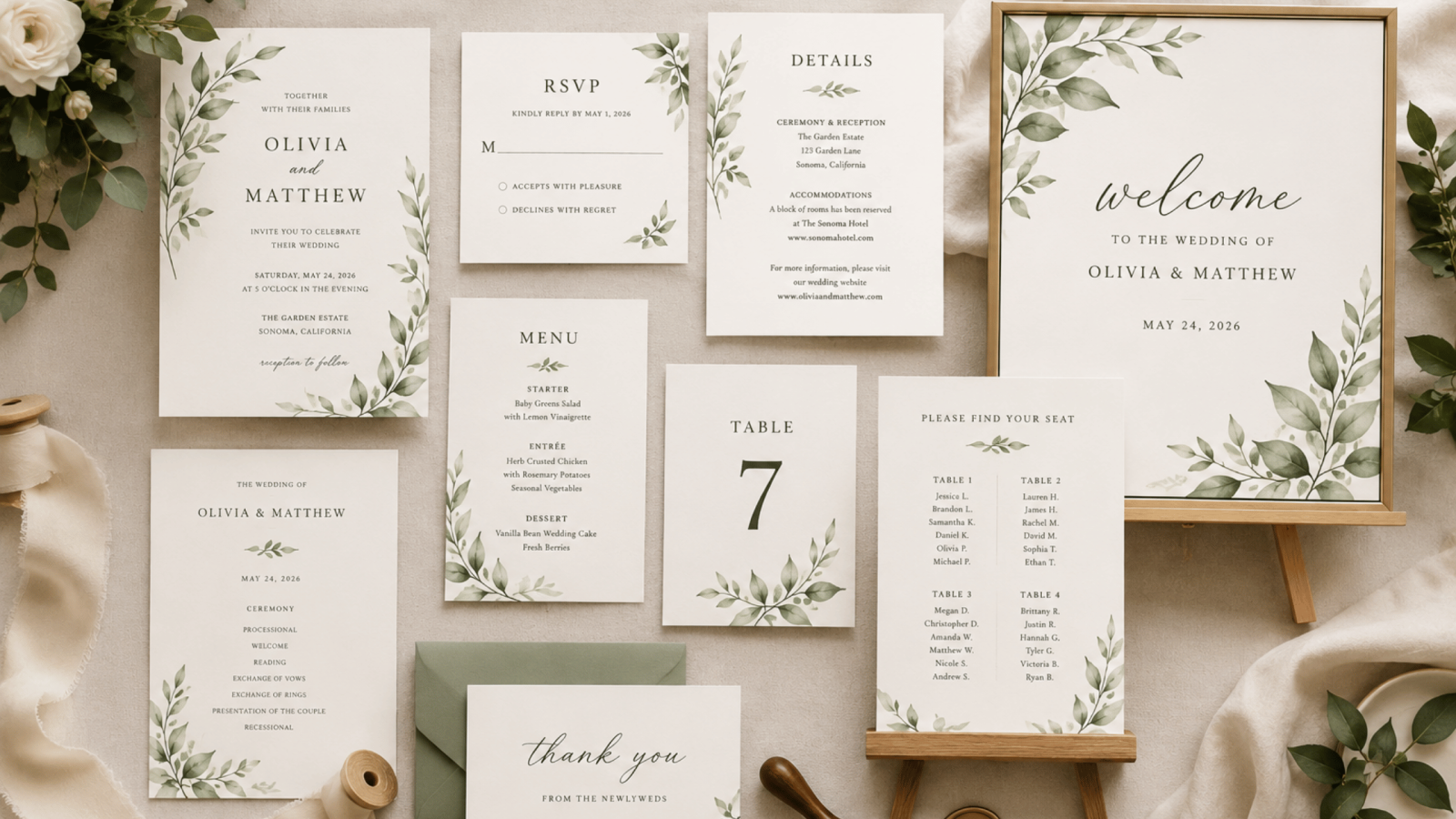
Imagine you’ve created an elegant botanical wedding invitation.
You already have your font combination, color palette, illustration style, and overall visual direction.
That invitation could become the starting point for a matching:
- RSVP card
- Details card
- Welcome sign
- Wedding menu
- Table number
- Seating chart
- Wedding program
- Thank-you card
You don’t need to reinvent the design for every piece.
Instead, adapt the established style to the purpose of each product.
This is where selling digital templates in bundles can become a repeatable process rather than a much larger design project.
One strong concept does more of the work.
Matching Doesn’t Mean Identical
One common mistake when creating a bundle is making every product look exactly the same.
Cohesion doesn’t require identical layouts.
In fact, each template should be designed around how it will actually be used.
A welcome sign needs to be readable from a distance. A menu needs enough structure to make several lines of information easy to scan. A place card may only contain a name and table number.
Copying the invitation layout onto each product could hurt readability.
Instead, repeat the visual language.
Use the same or complementary fonts. Keep the color palette consistent. Repeat key illustrations and decorative details. Maintain similar spacing and styling choices.
The products should feel like members of the same family, not duplicates of one another.
Think About the Buyer’s Entire Event
When deciding whether a design should become a bundle, think beyond the first product.
Ask yourself what the buyer is actually planning.
A bridal shower buyer might need an invitation, welcome sign, games, menu, favor tags, and thank-you cards.
Someone planning a first birthday might need an invitation, welcome sign, milestone board, food labels, favor tags, and thank-you cards.
A wedding buyer could need coordinating stationery before, during, and after the event.
This gives you a much clearer roadmap for expanding a design.
Instead of asking, “What else can I make with this?”
Ask, “What will this buyer probably need next?”
That small shift keeps your collection useful rather than simply making it bigger.
Don’t Add Products Just to Make a Bigger Bundle
More templates don’t automatically create more value.
A strong bundle feels intentional.
If you add products that don’t fit the occasion or that buyers are unlikely to use, the collection can become harder to understand.
Every product should have a clear reason for being there.
For example, five well-chosen baby shower templates that cover key parts of the celebration may be more useful than a collection of 15 loosely related products.
Keep the purpose clear and the visual direction cohesive.
That makes it easier for buyers to understand what they’re getting and how the pieces work together.
You Don’t Have to Choose Between Bundles and Singles
Here’s something that’s easy to overlook: creating a bundle doesn’t necessarily mean you have to stop offering the individual templates.
You can potentially do both.
The buyer who only needs an invitation has a simple option. The buyer who wants a coordinated event can choose the larger collection.
This is another reason selling digital templates in bundles can be worth exploring. You’re creating an additional way to package a design direction you’ve already developed.
Instead of constantly chasing completely new concepts, you can look at your strongest existing products and ask which ones have room to grow.
Build Your Bundle One Product at a Time
If creating an entire collection sounds intimidating, keep the process simple.
Start with your strongest template.
Then create the most logical coordinating product.
If you’ve designed a bridal shower invitation, perhaps the next product is a welcome sign. After that, create a matching game. Then a menu or favor tag.
Each new product becomes easier because your major design decisions have already been made.
You’re working with the same typography, palette, illustrations, and overall aesthetic.
The result is a faster, more repeatable workflow—and a collection that naturally feels cohesive.
Is Selling Digital Templates in Bundles Right for You?
Selling digital templates in bundles doesn’t have to replace individual products. The two approaches can work together.
Standalone templates are useful for testing new ideas and serving buyers who only need one product. Bundles allow you to expand strong concepts into more complete, coordinated solutions.
The key is not to create more products just for the sake of having more.
Start with a polished template. Make sure it’s clear, readable, and visually cohesive. Then consider what the person buying it will likely need next.
That invitation could become a welcome sign. The welcome sign could lead to a menu, game, thank-you card, or complete event collection.
You don’t need a brand-new design idea every time you want to create another product.
Sometimes your next sell-ready template is already hiding inside a design you’ve finished.