Thinking about selling templates on Etsy? Maybe you’ve seen shops thriving with wedding invitations, birthday templates, or baby shower designs and wondered if you could do the same. The truth is: you can. But uploading a few pretty designs won’t guarantee sales. Etsy is competitive, and buyers know exactly what they’re looking for. To stand out, you need a plan that’s realistic, strategic, and focused on what works.
This guide lays out the essentials. Do these consistently, and you’ll not only land your first sales but build a shop that keeps growing.

1. Pick a Micro-Niche, Not “Everything”
One of the biggest mistakes new sellers make is trying to design for every event at once. Weddings, birthdays, baby showers, graduations—it spreads you thin and blends you into the crowd.
Instead, focus on a micro-niche: a specific event, style, and color combination buyers are already searching for.
Examples of strong niches include:
- Rustic fall barn wedding invitations
- Modern arch baby shower invitations
- Minimalist graduation announcements
- Floral quinceañera invites
- Holiday party invitations
Wedding templates are one of the most competitive categories. If you choose this niche, make sure to niche down as much as possible. Instead of “wedding invitations,” think “terracotta arch wedding invitation template” or “rustic barn wedding suite.” Precision matters, and it makes your listings easier to find.
2. Start Small With One Strong Suite
You don’t need 20 listings to open your shop. What works best is starting with one polished suite—for example: invitation, RSVP, details card, and thank-you card.
Why this approach works:
- Buyers love the ease of a coordinated set.
- You get a higher order value per customer.
- You can test one idea thoroughly before scaling.
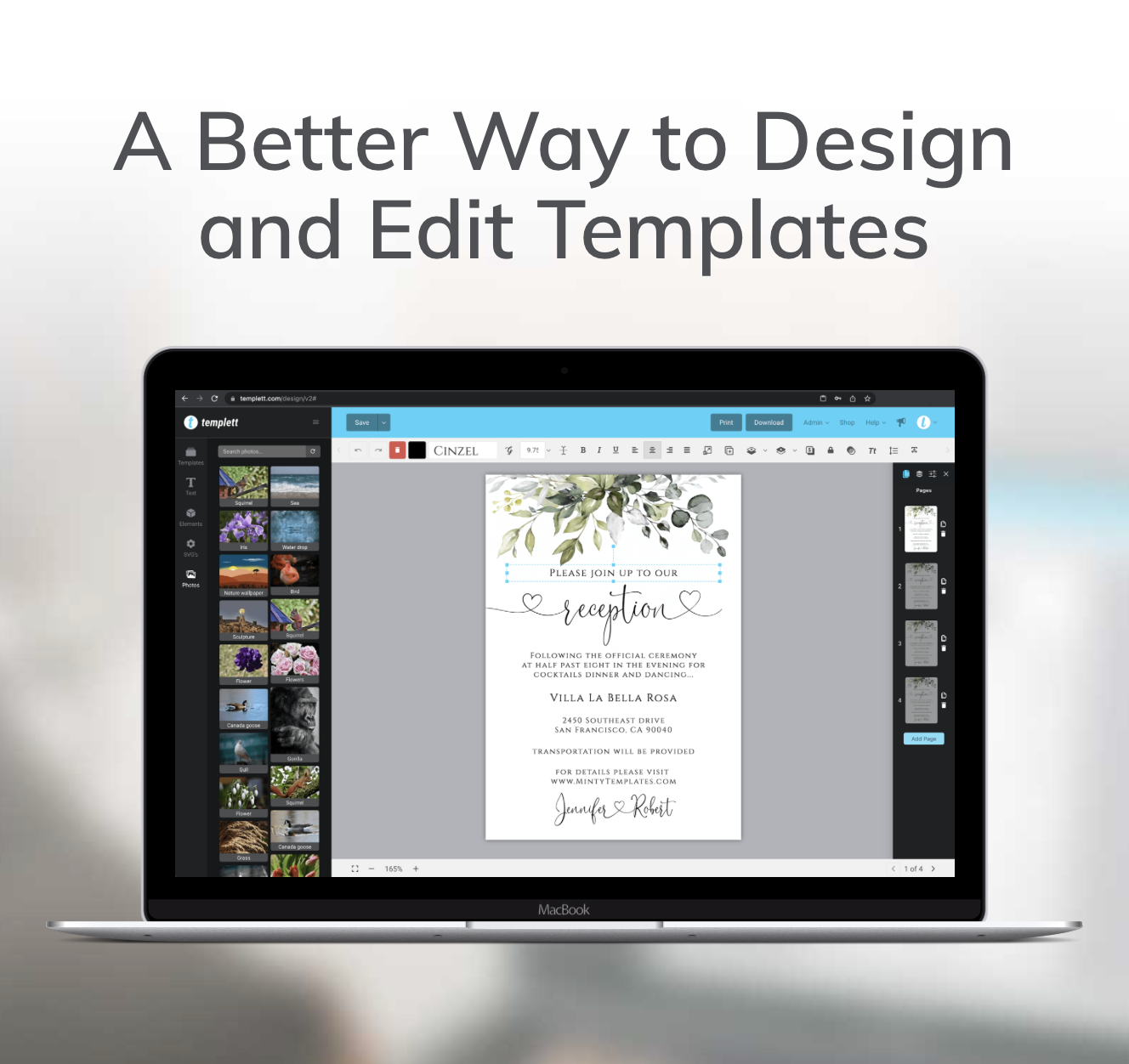
Stick to standard sizes (5×7 in, A7 envelopes) so buyers can easily print and use them. Add a Quick Start Guide to show buyers how to edit, and always include a Templett demo link so shoppers can test before they buy.
3. Write Titles That Match Buyer Searches
Your title is what makes you discoverable. Generic ones like “Elegant Invite” won’t rank. Buyers type in detailed, long-tail searches, and your listings should match those terms.
Examples of strong titles include:
- “Rustic Fall Wedding Invitation Template | Editable Barn Wedding Invite | Instant Download”
- “Modern Arch Baby Shower Invitation Template | Editable Digital Invite”
- “Minimalist Graduation Announcement Template | Instant Download Card”
- “Floral Quinceañera Invitation Template | Editable XV Invite”
- “Holiday Party Invitation Template | Editable Christmas Card”
The formula is simple: lead with the event, add the style/theme, and finish with keywords like “template,” “editable,” or “instant download.” This is one of the most important parts of selling templates on Etsy, since strong SEO makes your shop visible to buyers.
4. Use Images That Sell (Not Just Show)
Your mockups do the real selling. A flat file won’t convince buyers—they want to see how the design fits into their event.
What to include in your listing images:
- Hero styled mockup: A rustic fall wedding suite on kraft envelopes with dried florals or pampas grass.
- Close-up detail: Minimalist typography on a graduation announcement with a cap-and-gown prop.
- Mobile edit screenshot: A baby shower invite being customized on a phone.
- “What’s included” graphic: Clean breakdown of sizes and formats (invite, RSVP, details card).
- Printed photo: A real holiday party invitation photographed with décor or table settings.
Pro tip: Match the mockup style to the event. A quinceañera invite should feel bright and celebratory. A fall wedding invite should feel cozy and seasonal.
5. Price for Trust, Not the Cheapest
Undercutting everyone won’t make you successful. Too cheap, and buyers assume poor quality. Too expensive, and you won’t get clicks.
The sweet spot for templates is often $8–15 per suite. Start mid-market, then adjust once you have reviews.
Best practices:
- Bundle a suite instead of selling just one file.
- Use a small launch discount (10–15%) to land your first reviews.
- Raise your prices gradually as you build social proof.
When selling templates on Etsy, price sends a strong signal about value. Position yourself as affordable but trustworthy.
6. Post Early to Catch Seasonal Searches
Etsy’s algorithm takes 60–90 days to fully rank a listing. If you post your Halloween invite in October, it’s already too late.
Retailers like Target and Michaels stock seasonal décor months in advance, and your shop should do the same.
Examples:
- Halloween: List by August.
- Friendsgiving: List by late September.
- Thanksgiving: List by October.
- Fall weddings: List in summer.
- Baby showers: Themes like “little pumpkin” trend August–October.
Plan ahead so your designs are available when shoppers are actively searching.
7. Respond Quickly and Learn From Buyers
Etsy rewards fast replies, and buyers appreciate it too. A quick answer can mean the difference between a sale and a lost customer.
If you get the same question more than once, add it as an FAQ in your listing. This saves time and builds trust. Listening to buyers is one of the fastest ways to refine your templates.
8. Scale Only What Works
Don’t spread yourself thin creating 50 random templates. Let the market tell you what to scale.
When one template sells well:
- Duplicate it in new colors or styles with Templett’s duplicate feature.
- Expand it into a larger suite: menus, programs, seating charts, signage, and tags.
- Bundle into collections: “Complete Wedding Collection” instead of just “Invitation.”
This multiplies your earnings without reinventing the wheel.
Final Thoughts
Selling templates on Etsy isn’t about luck—it’s about strategy. Sellers who succeed aren’t just uploading random designs and hoping for the best. They’re choosing a niche, writing keyword-rich titles, creating strong visuals, pricing for trust, and scaling what works.
With the right approach—and tools like Templett to make designing and delivering easy—you can turn your first template into the foundation of a thriving shop. Start small, stay consistent, and remember: every successful shop began with one listing and the decision to keep going.