If your template business feels saturated, it’s usually not because there’s no room left.
It’s because most templates are solving the same problem in the same way.
Scroll through almost any category—wedding invitations, baby shower games, birthday signage—and you’ll start to notice patterns:
- Same phrases
- Same layouts
- Same style choices
- Same “safe” versions of a design
From a buyer’s perspective, it doesn’t feel like abundance.
It feels repetitive.
And that’s where the real opportunity is.

Saturation Is Really a Creativity Plateau
What looks like saturation is often a plateau in decision-making.
Most sellers:
- Follow what’s already selling
- Recreate popular designs
- Stay close to trends without pushing them
This creates a wave of templates that feel slightly different—but not meaningfully different.
So buyers don’t think:
“There are too many options.”
They think:
“These all feel the same.”
Standing out isn’t about doing something wildly new.
It’s about making more intentional, specific decisions.
Real Ways to Stand Out (That Most Sellers Skip)
Let’s move past generic advice and look at what actually separates a sell-ready template from everything else.
1. Design for a Specific Buyer Moment
Most templates are too broad.
Example:
- “Wedding invitation”
That’s not a niche. That’s a category.
Instead, anchor your design to a clear situation:
- Backyard summer wedding
- Formal black-tie evening
- Destination beach ceremony
- Minimal city hall wedding
Why this works:
When a buyer sees a template that matches their exact situation, they don’t compare—they recognize.
It instantly feels like:
“This is the one.”
That emotional match is what cuts through saturation.
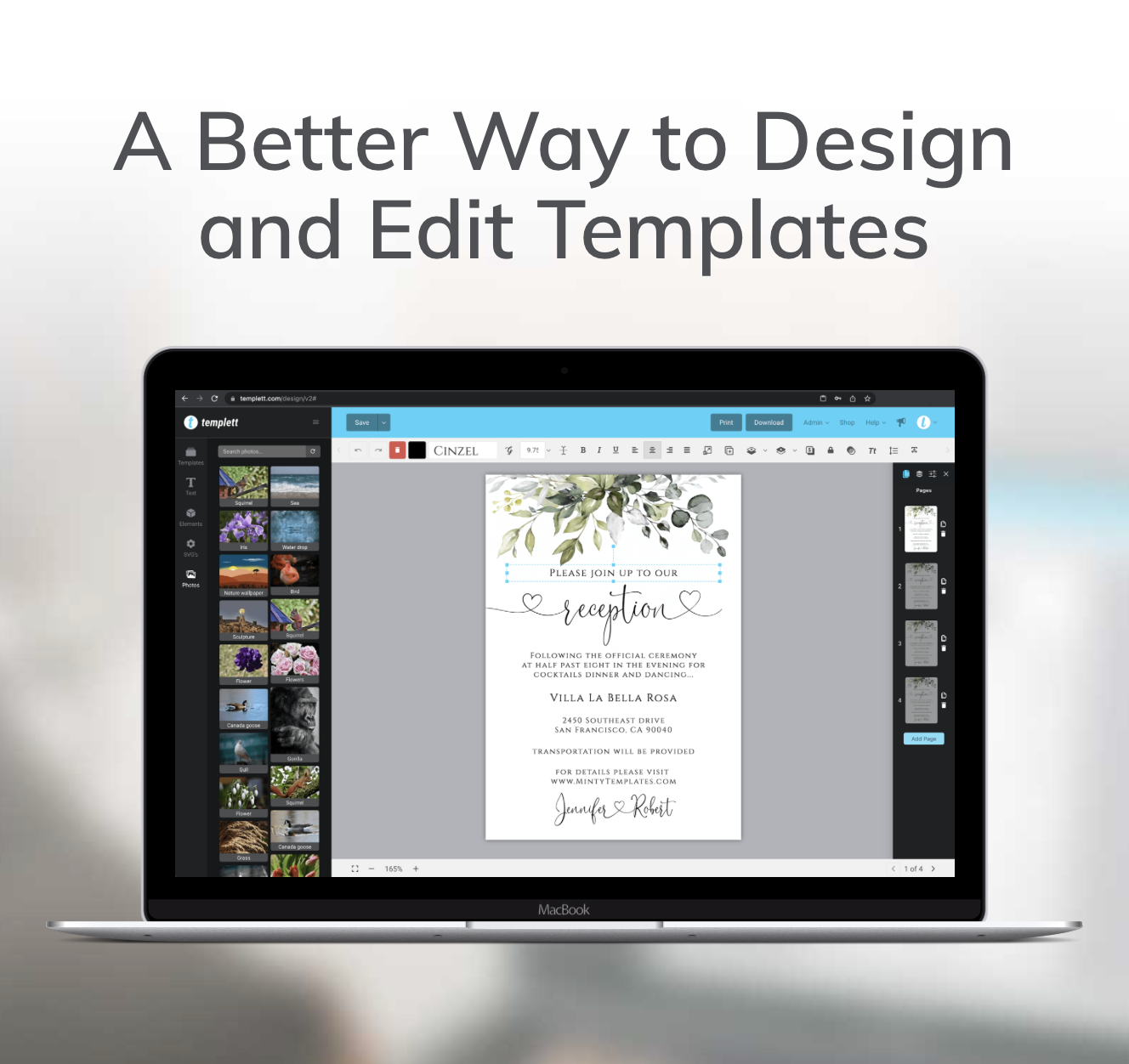
2. Build Around Real Content (Not Placeholder Text)
A subtle but powerful shift.
Many templates are designed around:
“Your text here”
Which leads to awkward spacing, uneven layouts, and guesswork.
Instead:
- Use realistic names
- Real dates and locations
- Natural sentence lengths
Design around how people actually write.
Why this matters:
It makes your template feel finished before they even touch it.
And more importantly:
It shows buyers exactly how their version will look.
3. Make the Customization Obvious
Buyers don’t just care how it looks.
They care how easy it feels to edit.
Templates often lose sales because:
- It’s unclear what can be changed
- The structure feels rigid
- The layout looks fragile
To stand out:
- Keep text groupings intuitive
- Avoid over-complicated layouts
- Make edits feel safe and predictable
The goal is simple:
“I can open this and update it in minutes.”
That confidence is a competitive advantage.
4. Use Constraints to Create Identity
Trying to appeal to everyone makes your design forgettable.
Instead, introduce constraints:
- A limited color palette
- A defined style direction
- A consistent tone (formal, playful, modern, etc.)
For example:
A baby shower template that fully commits to a soft, storybook feel will stand out more than one that mixes styles.
Why this works:
Strong identity is easier to recognize—and easier to choose.
5. Focus on the “First Impression Moment”
Buyers don’t study your design.
They scan it.
And when the template business feels saturated, those first 2 seconds matter even more.
What they notice instantly:
Is it easy to read?
Does it feel complete?
Does it match the event?
To improve this:
Make key information instantly visible
Avoid visual clutter
Ensure the design feels balanced at a glance
If your template looks clear, cohesive, and usable right away, it stands out—and gets the click.
6. Turn One Idea Into Variations (Instead of New Ideas)
Most sellers try to stand out by creating more designs.
But a better strategy is:
Go deeper, not wider.
Take one strong concept and create variations:
- Color variations (light vs dark, seasonal tones)
- Layout variations (centered vs minimal)
- Format variations (invitation, details card, signage)
This does two things:
- Builds a cohesive shop
- Increases the chance a buyer finds their version of your idea
It’s a repeatable system—not constant reinvention.
7. Upgrade the “Boring” Parts
Here’s something most sellers ignore:
The parts that feel standard are where you can stand out fastest.
Look at:
- Date formatting
- Section spacing
- Divider styles
- Small text areas
These details are often rushed.
But when they’re clean and intentional, the entire template feels more polished.
It’s not about adding more.
It’s about refining what’s already there.
8. Match the Way People Actually Shop
Buyers don’t search like designers.
They search by:
- Event type
- Mood
- Situation
Not:
- Font names
- Design styles
- Technical terms
So instead of designing for:
“Minimal serif invitation”
Design for:
“Modern black and white wedding invitation for a formal evening”
This shift helps your template feel aligned with real intent—not just aesthetics.
The Real Shift: From “Different” to “Relevant”
You don’t need to be wildly unique to stand out.
You need to be more relevant.
That means:
- Matching a specific moment
- Showing a clear use case
- Making customization feel easy
- Creating a design that feels complete
In a crowded market, relevance beats creativity every time.

Final Takeaway
If your template business feels saturated, it’s not a signal that the opportunity is gone.
It’s a signal that:
- Buyers have more choices
- Expectations are higher
- Generic designs are easier to ignore
The advantage now goes to sellers who:
- Design with intention
- Focus on real buyer situations
- Create templates that feel ready, not raw
And the best part?
You don’t need to start over.
You can take what you already have, make a few smarter decisions, and turn it into something that feels:
- More specific
- More usable
- More sell-ready
Same template.
Stronger positioning.
That’s how you stand out.